
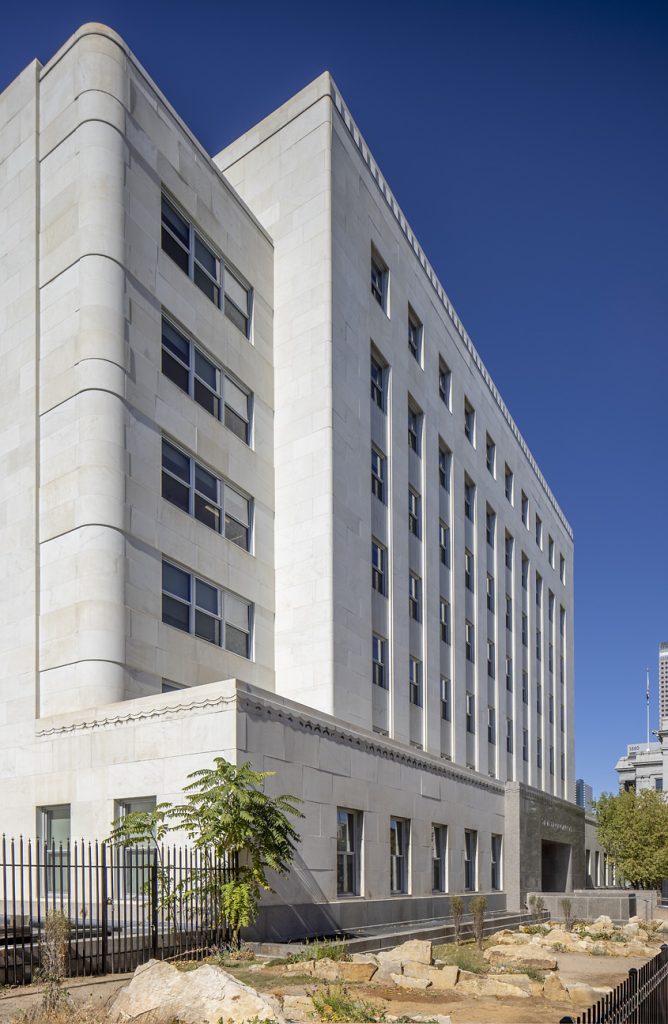
The State of Colorado Annex Building at 1313 Sherman Street has undergone a transformative renovation aimed at improving comfort, efficiency, and sustainability, thanks to the RATIO design team. This project focused on breathing new life into a historic structure, replacing outdated plumbing systems and modernizing HVAC infrastructure to meet today’s performance and environmental standards.
Challenges of an Aging Infrastructure
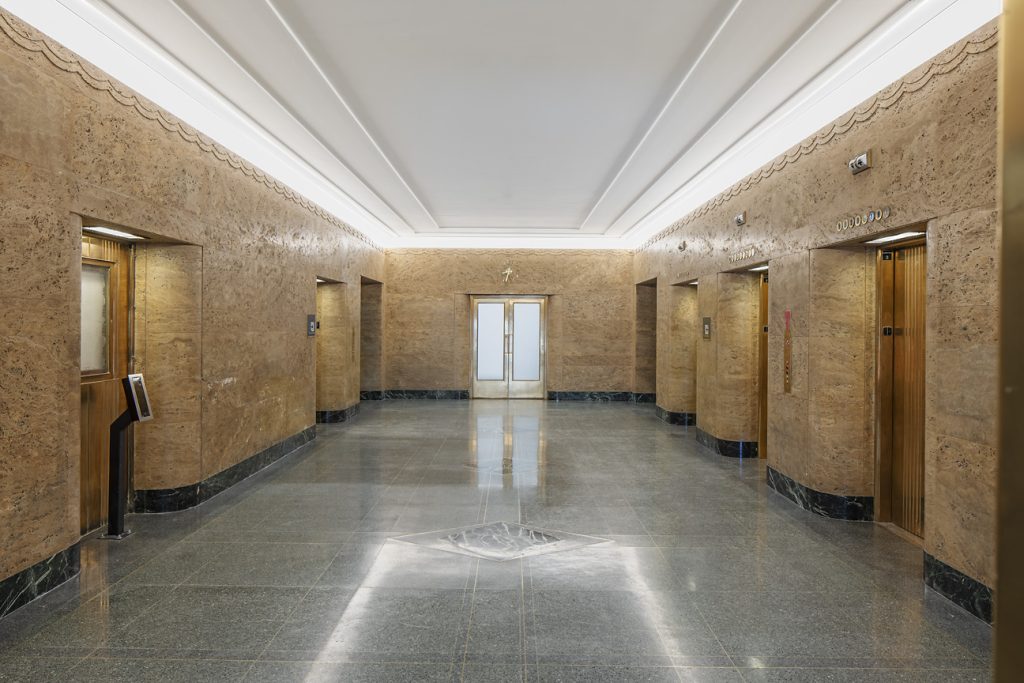
The Annex Building’s original design prioritized heating and ventilation, with cooling added later as an afterthought. This retrofit approach left the building with undersized ductwork and minimal ceiling space, creating significant design hurdles. Existing ducts embedded in floors had to be abandoned in place, and engineers faced the complex task of separating basement systems (serving 24/7 State Patrol operations) from the rest of the building while maintaining both the historic fabric as well as the integrity of existing fire ratings at every level.
Another major challenge was decoupling domestic hot water from the existing steam system, which remained operational during and after construction to serve adjacent buildings sharing the existing distribution system. Moving water out of the basement and into upper floors required innovative solutions to overcome spatial and logistical constraints.
Electrification and Sustainability Goals
Central to the renovation is the commitment to sustainability. The project targets LEED Gold certification, emphasizing energy performance, water use reduction, and refrigerant management. Electrification of HVAC systems plays a pivotal role, aligning with Colorado’s broader environmental objectives.
Several system options were evaluated, including:
- Variable Refrigerant Flow (VRF)
- Chilled Water/Hydronic Heat
- Variable Air Volume (VAV) Packaged Heat Pump RTUs
Each option offered unique benefits and limitations. While heat pumps and energy recovery systems are essential for achieving LEED points, they introduce complexities in refrigerant management. VRF systems, for example, use significant volumes of refrigerant, making enhanced credits for low Global Warming Potential (GWP) refrigerants challenging with current technology.
Balancing Performance and Practicality
Budget constraints, operations and maintenance (O&M) staffing, and technology confidence were key factors influencing system selection. Electrification, while environmentally advantageous, can complicate energy performance scoring compared to traditional gas systems. High-efficiency heat pumps and advanced controls were necessary to bridge this gap.
Maintenance considerations also shaped design decisions. Multiple system components increase potential failure points and require ongoing investment in replacement parts. Additionally, complex control sequences demand thorough training for maintenance staff to ensure reliable operation.
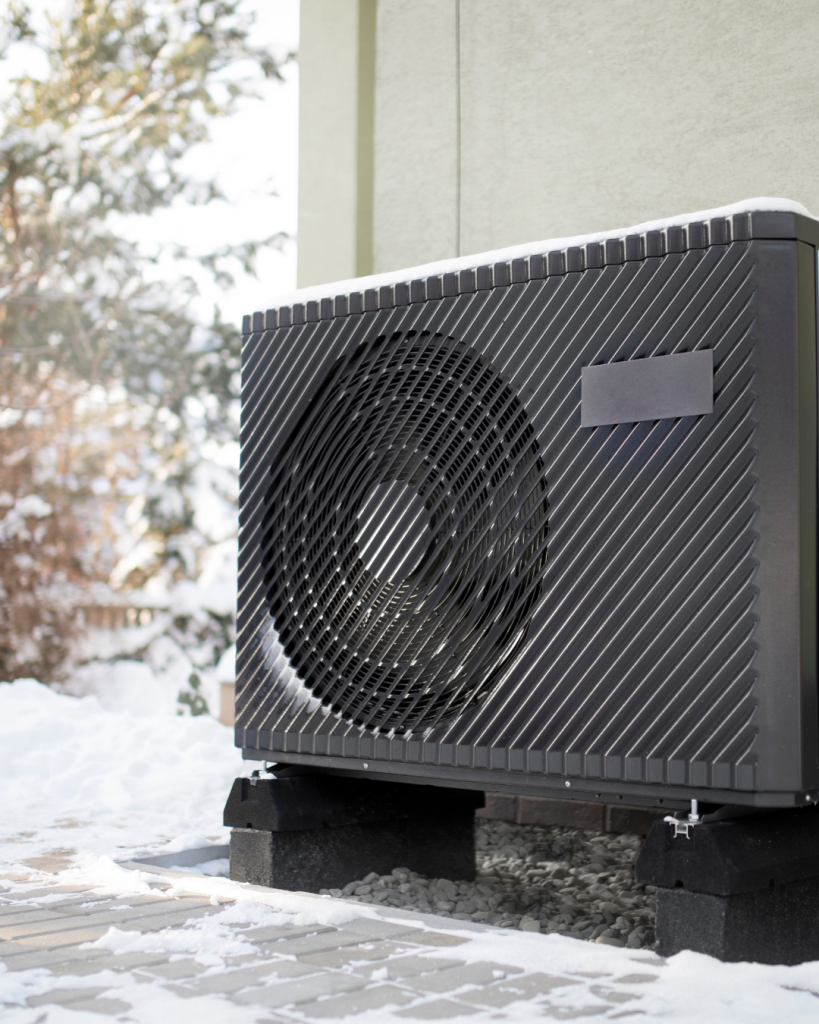
Ultimately, based on these factors of first cost, energy efficiency, operability, and particularly constructability, the State chose to move forward with a VRF heat pump system with integral heat recovery. This all-electric system is highly efficient, as it allows the system to move heat internally from one zone to another, utilizing the heat energy already in the building as much as possible and minimizing how much the outdoor heat pump must work to draw heat from the ambient outside air for space heating or reject heat from the building to the outside for space cooling.
Ventilation was provided by a packaged heat pump Dedicated Outdoor Air System (DOAS) with energy recovery. This DOAS provide fresh, filtered outside air to the entire building, simultaneously controlling building pressure to mitigate unwanted infiltration via exhaust air drawn from each level—and all while utilizing an energy recovery wheel to reduce the load on the heat pump heating/cooling system!
Plumbing Design Innovations
On the plumbing side, the renovation prioritizes water conservation and metering to support LEED goals. Strategies include reducing water use and implementing additional metering for better resource management. These upgrades not only enhance sustainability but also improve long-term operational efficiency.
Looking Ahead
The Annex Building renovation exemplifies the intersection of historic preservation and modern engineering. By addressing spatial limitations, embracing electrification, and pursuing LEED Gold certification, Colorado is setting a benchmark for sustainable government facilities. This project demonstrates that even the most challenging infrastructure can be transformed into a model of efficiency and environmental stewardship.
Photography © Frank Ooms